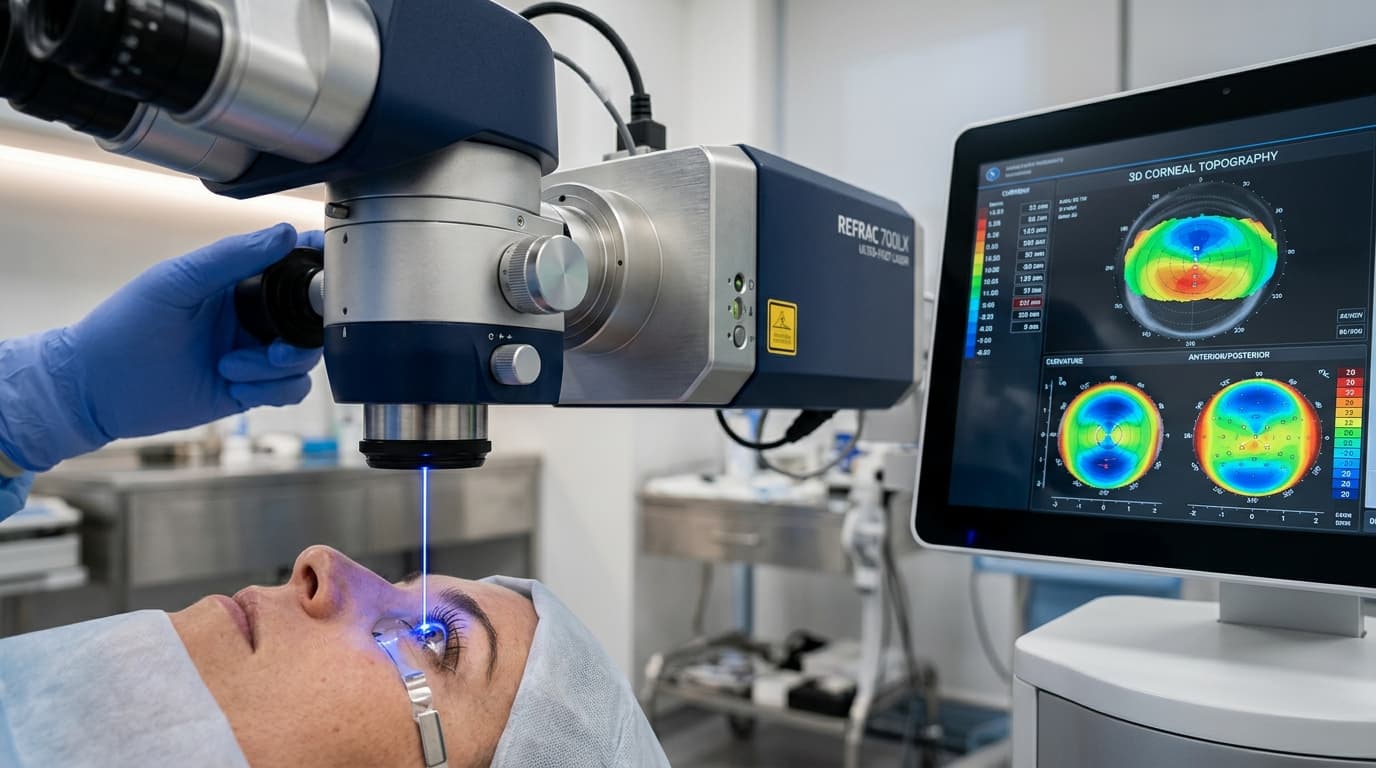
- Retinal detachment is a true ophthalmic emergency that requires immediate consultant care.
- Flashes of light and sudden floaters are the earliest indicators of a retinal tear.
- Modern 23G and 25G micro-vitrectomy allows sutureless surgical repair.
- Prompt surgery within 24 to 72 hours significantly improves visual restoration chances.
The retina is the light-sensitive neural tissue lining the back of the eye, responsible for converting light rays into visual signals transmitted to the brain. When the retina detaches from its underlying vascular layer, blood supply and oxygen nourishment cease immediately. Retinal detachment is one of the true medical emergencies in ophthalmology — every hour counts toward preserving sight.
The Three Classic Warning Signs
1. Sudden Flashes of Light (Photopsia): Brief, lightning-like flashes in the peripheral vision, especially noticeable in low-light environments.
2. Shower of Black Floaters: Sudden emergence of dozens of dark spots, cobwebs, or ring-like shadows floating across the field of view.
3. Shadow or Dark Curtain: A progressive dark shadow advancing from the side or bottom of the visual field toward the center, signifying that retinal detachment is actively progressing.
Who is at Highest Risk?
Individuals with high myopia (severe nearsightedness exceeding -5 diopters) have elongated eyeballs with thinner retinal peripheries, increasing tear susceptibility.
Patients with diabetic retinopathy, previous cataract surgery, ocular blunt trauma, or a family history of retinal tears require prompt annual dilated fundus examinations.
Modern Micro-Incision Pars Plana Vitrectomy (PPV)
At The Eyes clinic, Dr. Athar Akram (FRCS Edinburgh, FCPS, Governor's Award recipient) utilizes advanced 23-gauge and 25-gauge micro-incision vitrectomy systems.
Through microscopic self-sealing ports, the vitreous gel tugging on the retina is meticulously removed, the subretinal fluid is drained, and specialized argon endolaser photocoagulation seals the tear. A temporary gas bubble or medical silicone oil tamponade holds the retina flat while biological healing occurs.
Post-Operative Recovery and Positioning
Patients may be asked to maintain a specific head posture (such as prone/face-down) for several days to ensure the gas bubble exerts pressure directly against the treated tear.
With prompt intervention, modern vitrectomy achieves successful retinal reattachment in over 90% of primary cases.
Medical Conclusion
If you experience sudden flashes of light, a storm of floaters, or a curtain-like shadow over your eye, seek immediate ophthalmic emergency examination. At The Eyes in Shah Jamal, our vitreo-retinal surgical unit provides specialized emergency diagnostic evaluation.

Dr. Athar Akram
Senior consultant eye surgeon with over 35 years of clinical and microsurgical experience in Lahore. Senior member of The Eyes clinical founding team at 162-A Shah Jamal.
Questions About Your Eye Health?
Book an in-person diagnostic examination with our senior consultant team at 162-A Shah Jamal, Lahore.